


Speed Counts: How Local CAPTCHA Solving Comes Out Ahead
Data control is a genuine issue when each challenge gets shipped to a third-party service. With CapSkip, nothing departs your machine, so private workflows stay on your own systems. If you handle sensitive work, that can be the deciding factor.
GeeTest challenges can be famously awkward for bots, which is why having a solver that covers them is a real plus. CapSkip handles GeeTest on your machine, so workflows that rely on these sites keep running whenever the puzzle appears.
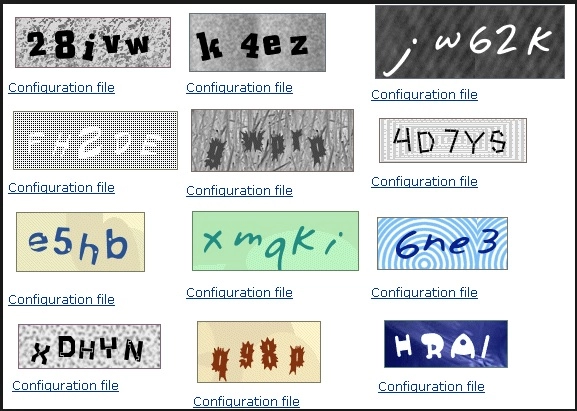
Web scraping remains one of the top use cases teams adopt a CAPTCHA solver. One blocked page will halt an whole job, so clearing challenges automatically keeps throughput steady. CapSkip fits such pipelines neatly.
Fundamentally, a CAPTCHA solver reads a challenge and returns the answer a site is looking for, so an hands-off tool can keep going. What sets CapSkip apart is the work stays on your own Windows machine – no challenge data leaves your hardware, and there are no per-solve charges. That combination of privacy and predictable cost turns out to be hard to beat for steady automation.
Google reCAPTCHA v2 remains among the most widespread challenges on the web, from the familiar checkbox to invisible and callback variants. CapSkip solves all of these on your own machine quickly, which means your automation does not stall whenever one appears. Since it mirrors popular solver APIs, hooking it up tends to be painless.
CapSkip’s API was built to emulate the endpoints of major captcha solving software-solving services. In practical terms, scripts and scripts that already target other services are able to point at CapSkip with minimal changes and zero new code.
Cloudflare Turnstile has become a frequent gatekeeper on pages that aim to deter bots and skip traditional image puzzles. CapSkip clears Turnstile on your machine in a few seconds, covering both challenge variants. If you run scrapers that run into Turnstile, this removes a major obstacle.
A major advantages of processing locally is cost. Traditional services charge for each solve, so your costs climb the moment throughput increases. CapSkip goes with flat-rate pricing and unlimited solves, so you can scale without worrying about the meter.
Good docs plus examples make onboarding smoother. Between the setup guide to the API reference and an FAQ, the common questions are clear answers before you filing a ticket, so the team spends effort on building rather than troubleshooting.
Privacy is a genuine issue when every challenge gets shipped to a third-party service. Because CapSkip runs locally, no challenge data departs your hardware, so sensitive projects remain on your own systems. For sensitive work, this can be the deciding factor.
CAPTCHAs show up on almost every form, and they can stop nearly any automated workflow in its tracks. The good news is that a dedicated solver handles them automatically, and CapSkip takes care of this locally.
Selenium is a go-to for browser automation, and CapSkip fits right in. You keep your driver logic unchanged and delegate the CAPTCHA to CapSkip whenever one appears, so the run continues without manual steps.
A Selenium setup remains a go-to for browser automation, and CapSkip fits into it cleanly. Your the WebDriver logic unchanged and delegate the CAPTCHA to CapSkip when one appears, so the session keeps going with no manual input.
Web scraping is one of the top reasons teams adopt a CAPTCHA solver. A single stalled page can halt an whole job, so clearing challenges on the fly lets throughput predictable. CapSkip fits these pipelines cleanly.
The developer API is designed to mirror the endpoints of major CAPTCHA-solving services. In practical terms, scripts and scripts that currently target those services are able to switch to CapSkip with little more than a URL change and no new code.
Python projects have a clean path with CapSkip, since it mirrors the request format of major solving services. Often, that means pointing current code at CapSkip with minimal effort – nothing to rebuild.
The developer API was built to emulate the request format of the major CAPTCHA-solving services. In practical terms, tools and scripts that already target other services can point at CapSkip needing minimal changes and zero coding.
A Selenium setup is a staple for browser automation, and CapSkip fits right in. You keep the WebDriver flow unchanged and delegate the challenge to CapSkip whenever one shows up, so the run continues with no human steps.
Privacy is a genuine issue when every challenge is sent to a remote service. With CapSkip, no challenge data departs your machine, so sensitive projects stay contained. If you handle sensitive data, that is often the clincher.
To kick the tires, there is a cheap one-week trial includes a thousand solves, which is plenty enough to test how well it works against real targets. Once it does the job, moving up is just a quick step away.